Kusan City of Wolves Game Review
A clear-eyed look at Jin’s hardcore top-down shooter based on demo feel and official promises.
Preview posture: demo first, promises labeled
Kusan City of Wolves arrives July 30, 2026 from CIRCLEfromDOT and PQube. This write-up is a preview-review: it trusts what the public demo already proves in the hands, and it labels what still depends on the full 54-stage campaign, late bosses, and finished story chapters. If you want a hype monologue, look elsewhere. If you want an honest fit check for a merciless top-down shooter, keep reading.
The fantasy is sharp. You are Jin, an ex-soldier fixer with a War Hand and auto-targeting Quantum Knife, protecting Haru—a girl fitted with a city-grade atomic weapon—through a rain-soaked neon metropolis. Marketing promises stylish chains, Bolts upgrades, S-Ranks, comic-panel cutscenes, and a Loptimist soundtrack that never blinks. The demo largely sells the combat half of that pitch.
Combat feel: the demo’s strongest argument
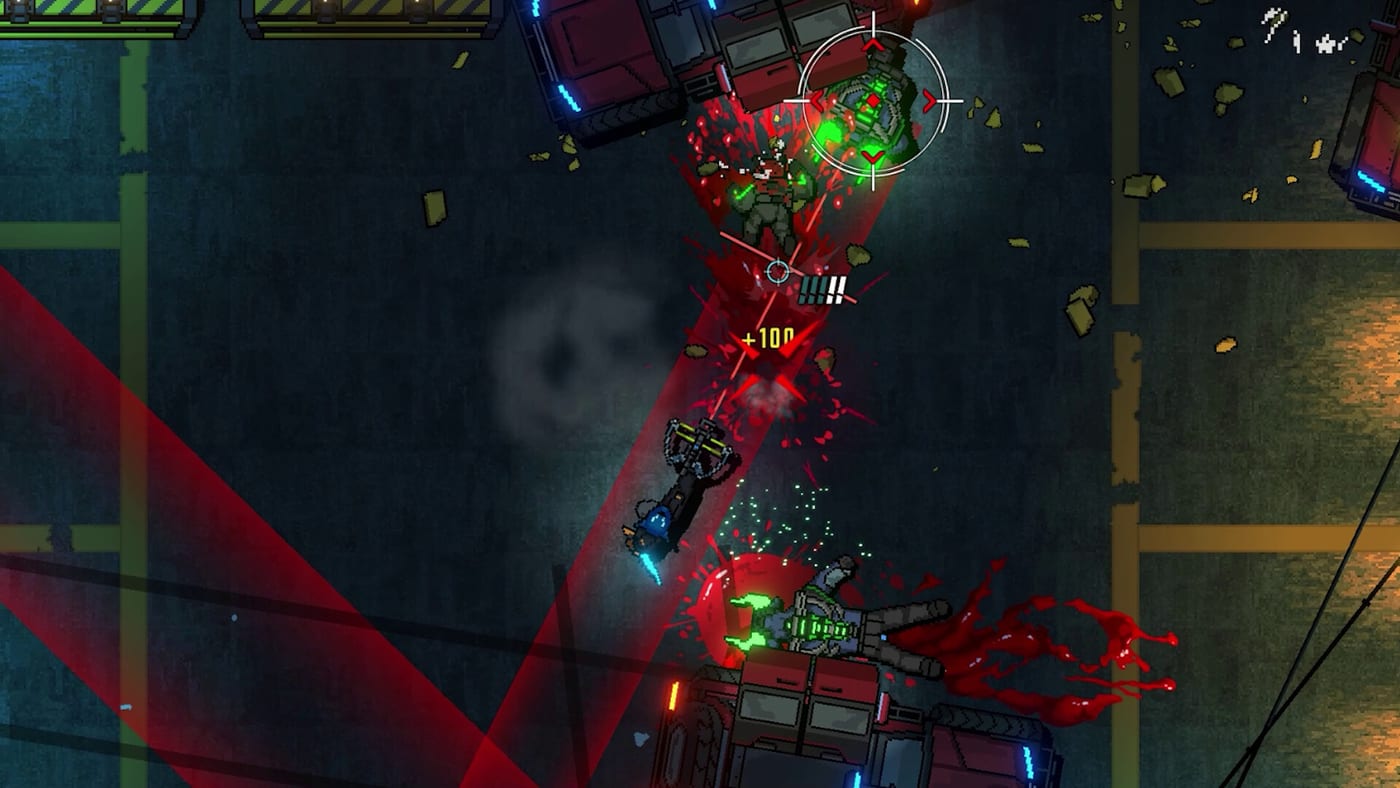
Moment to moment, Kusan feels like a hardcore arena game wearing neo-noir clothes. Gunplay wants clean lines. Movement wants intent. The War Hand turns breakables and armored targets into punctuation. The Quantum Knife rewards standing in the right place before you throw, not after you panic. When a chain lands—firearm pressure into knife into prosthetic smash—the room sings.
That loop already supports the Bolts fantasy. Smash, scoop, upgrade, return. Even in a focused demo slice, buying a mid-run power spike changes how the next corridor plays. That is rare and good: upgrades are not a pause-menu vacation; they are part of the fight’s rhythm.
If this clicks for you, go deeper with How to Play, Quantum Knife, and War Hand and Bolts. If it feels unfair after thirty minutes, believe that feeling—the full game is unlikely to suddenly become cozy.
Difficulty and mastery
Official language is not shy: one mistake means death; only legends get S-Rank. The demo backs the attitude. Resets are part of the grammar. Boss tastes already ask you to learn patterns instead of leaning on raw HP sponges. For players who love Hotline-adjacent pressure, smash-em-up routing, and rank chasing, that design is the feature.
For players who want narrative tourism without fail states, it is the wall. There is no shame in bouncing. Hardcore is a promise, not a moral ranking. Use the S-Rank Tracker only if perfectionism sounds fun rather than punishing.
Presentation and soundtrack
Pixel-art rain, neon signage, and comic-panel storytelling give Kusan a distinct face. The city feels corrupt before a single line of dialogue finishes. Loptimist’s hip-hop score—loops and deep 808s—does real work. It pushes pace. It also risks fatigue if you binge long sessions without breaks; that is a taste note, not a bug report.
Story delivery in the demo is appetizer-sized: enough of Jin, Haru, and the city’s hunger to care, not enough to grade the full conspiracy. Cast names like Wonny, Ayn, DJ Garak, Guan, and Hoban matter more once chapters stack. Keep expectations honest via the Story Overview and Jin and Cast.
What marketing still has to prove
Be explicit about open questions until you finish the July 30, 2026 release:
- Does stage variety across all 54 maps stay inventive after the early chapter grammar?
- Do late bosses remain readable under max speed pressure?
- Does Bolts economy stay interesting when loadouts are mature?
- Do comic-panel chapters stick the landing on betrayal and Haru’s arc?
- How does the Switch build feel beside PC and current-gen consoles in long sessions?
None of those questions erase the demo’s strengths. They stop a trailer from pretending it already reviewed the campaign end credits.
Verdict-shaped summary (no fake score)
Buy / wishlist signal: Strong—if you want a stylish, merciless single-player top-down shooter and the demo already made you restart with a smile.
Wait signal: Smart—if you liked the vibe but hated the fail-state density; wait for launch patches, longer previews, or a friend’s clear of later chapters.
Skip signal: Fair—if you need multiplayer, soft difficulty, or story without mechanical homework.
For platforms, demo availability, and Steam’s i5-6600 / 8 GB / GTX 660 minimum line, read Platforms and Specs. For practice after you commit, use the Guides Hub, Bolts Planner, and Tools Hub.
Who should prioritize day-one
Day-one makes sense if you already live in rank-chase shooters, you finished the demo hungry, and you want the cast’s neo-noir pressure while the discourse is fresh. Day-one is optional if you prefer a steadier patch cadence or you are only mildly curious about War Hand spectacle.
Either way, do the honest thing: play the demo, then decide. This review’s job is to narrate that decision framework—not to substitute for your hands on the stick or keyboard.
First scored review signal
Checkpoint Gaming published a 7/10 Good review on July 29, 2026 (PC) ahead of launch—praising presentation, upgrades, and replayability while criticizing narrative pacing, tutorial gaps (especially parry inputs), and Hotline Miami familiarity. GameSpew published a positive unscored review praising melee combat but warning about gunner difficulty spikes. Read the full roundup on Early Reviews and Hotline Comparison before treating this preview-review as the only verdict. Metacritic aggregation was still empty late July 2026.
Final notes
Kusan City of Wolves looks like a studio swinging for a specific crowd and mostly connecting in the slice we can play now. Jin’s kit is memorable. Bolts spends feel meaningful. The aesthetic has teeth. The difficulty will sort the audience quickly. That sorting is healthy. Just keep the full campaign’s report card marked incomplete until July 30, 2026 lets you walk all 54 stages yourself.
Return to the Review Hub for the sibling specs page, and keep the Characters Hub open when a cutscene name sticks in your head longer than a boss pattern.
Frequently Asked Questions
Quick answers to the most common questions.
Is this a full launch review?
No. It is a preview-review based on the public demo and official marketing, with open questions labeled for the full campaign.
Does the demo represent the combat well?
Yes. War Hand, Quantum Knife, Bolts upgrades, and fail-state pressure already communicate the game’s hardcore identity.
Who will enjoy Kusan City of Wolves most?
Players who like stylish top-down shooters, short reset loops, S-Rank goals, and neo-noir presentation.
Should I wait instead of buying day one?
Wait if the demo’s difficulty felt miserable, or if you want more coverage of late chapters and the Switch long-session feel.
Where do I go after this review?
Check Platforms and Specs, then use Getting Started and the S-Rank Tracker if you decide to practice.